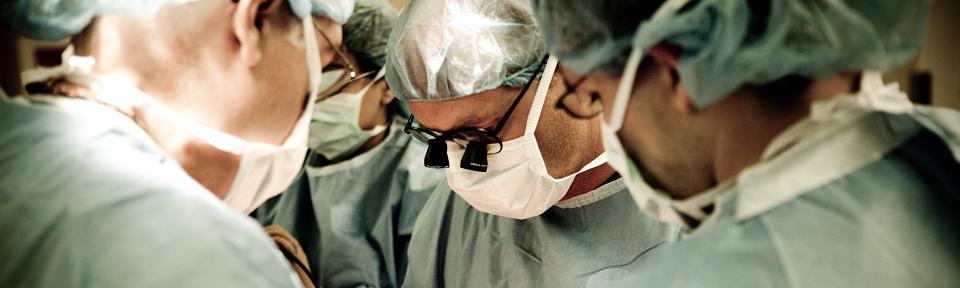
Trauma & Acute Care Surgery

Trauma & Acute Care Surgery
Leading Acute Care and Trauma Surgery Across the Mountain West

The Section of Acute Care Surgery at University of Utah Health is a nationally engaged academic program advancing the care of critically ill and injured patients through integrated trauma surgery, emergency general surgery, and surgical critical care. As a tertiary and quaternary referral center serving the Mountain West, the program manages some of the region’s most complex surgical emergencies while helping shape the future of acute care surgery through clinical innovation, education, and multidisciplinary research.
Unlike traditional models where trauma, emergency surgery, and critical care operate separately, our faculty provide continuous care across the full patient journey—from emergency resuscitation and operative intervention to ICU management, recovery, and long-term follow-up. This integrated approach strengthens clinical continuity, improves outcomes for high-acuity patients, and creates a uniquely immersive training environment for residents, fellows, and future surgical leaders.
As a verified Level I Trauma Center and regional referral destination, the section cares for patients transferred from across Utah, Idaho, Wyoming, Montana, and surrounding states for advanced trauma care, complex abdominal emergencies, reoperative surgery, and multidisciplinary critical care management.
ACUTE CARE & TRAUMA SURGERY AT A GLANCE
FIRST
Level I Trauma Center in Utah
~25 YEARS
of Trauma System Leadership
REGIONAL REFERRAL
Trauma Center for the Mountain West
INTEGRATED
Trauma, EGS, & Surgical Critical Care Model
5-YEAR TRAINING
Residents train on Acute Care Surgery all 5 years!
ABOUT ACUTE CARE & TRAUMA SURGERY
Acute Care Surgery at University of Utah Health represents one of the few truly integrated academic acute care models in the region, combining trauma surgery, emergency general surgery (EGS), and surgical critical care within a single collaborative section.
The program is built around the management of high-acuity surgical disease and the coordination of multidisciplinary care for critically ill patients. Faculty are dual-trained surgeon-intensivists who manage patients across the entire continuum of care, allowing for seamless transitions between operative management, critical care, and recovery.
As the referral center for complex emergency surgical disease across the Mountain West, the program routinely manages patients requiring advanced operative decision-making, rescue surgery, and multidisciplinary coordination not commonly available in lower-acuity settings.
The program’s academic mission extends beyond clinical care alone. Faculty contribute nationally to trauma systems development, surgical quality improvement, emergency surgery verification initiatives, critical care innovation, and surgical education.
Why This Program Stands Out
- Integrated trauma, emergency surgery, and ICU model
- High-acuity operative experience across the care continuum
- Regional referral center for complex surgical emergencies
- Strong multidisciplinary collaboration across specialties
- National faculty leadership in trauma and acute care surgery organizations
- Broad operative exposure in both open and minimally invasive surgery
- Academic environment emphasizing research, innovation, and education
- Unique exposure to rural, recreation-related, and mountain-region trauma
Trauma & Acute Care Surgery Leadership Team
Our nationally engaged surgeon-scientists, educators, and clinical leaders are committed to advancing acute care surgery through innovation, mentorship, and multidisciplinary collaboration.
Faculty regularly serve as:
- National speakers
- Guideline contributors
- Surgical educators
- Research collaborators
- Committee leaders within national surgical organizations
Faculty maintain active involvement in trauma systems leadership, emergency surgery quality initiatives, graduate medical education, and national academic societies focused on trauma, emergency surgery, and surgical critical care.
We have a strong culture of mentorship and academic development supporting trainees, junior faculty, and collaborative scholarship.
Faculty and trainees work within a collaborative environment that encourages clinical innovation, systems-based thinking, academic inquiry, and leadership development across all stages of surgical training and career advancement.

Ram Nirula MD, MPH, FACS
Division Chief of General Surgery
Professor of Surgery
Dr. D. Rees Jensen and Eleanor T. Jensen Endowed Chair

Toby M. Enniss, MD, MBA, FACS
Associate Professor of Surgery
Trauma Medical Director
Director of Acute Care Surgery Service

Alexander Colonna, MD, MSCI, FACS
Associate Professor of Surgery

Joanna Grudziak, MD, MPH, FACS
Associate Professor of Surgery

Piroska Kopar, MD, MBA, FACS
Associate Professor of Surgery

Sarah Lombardo, MD, MSc
Assistant Professor of Surgery

Marta McCrum, MD, MPH
Associate Professor of Surgery

Thomas Shoultz, MD, FACS
Associate Professor of Surgery

Jason B. Young, MD, PharmD, FACS
Associate Professor of Surgery
CLINICAL EXCELLENCE & SPECIALIZED EXPERTISE
The section provides advanced care for patients with traumatic injuries, emergency surgical disease, and critical illness through a coordinated multidisciplinary model that integrates operative care, ICU management, and recovery planning.
This integrated structure allows faculty to manage the most complex surgical emergencies while maintaining continuity across every stage of treatment.
As a verified Level I Trauma Center, the program serves as a regional destination for high-acuity traumatic injury.
Faculty lead multidisciplinary trauma teams in collaboration with neurosurgery, orthopedics, ENT, urology, plastic surgery, anesthesia, and critical care teams to manage blunt trauma, penetrating injuries, recreation-related trauma, and multisystem surgical emergencies.
Because of the region’s geography and outdoor recreation culture, faculty manage a uniquely broad spectrum of mountain, wilderness, and sport-related trauma uncommon in many urban trauma systems. These include skiing, snowboarding, climbing, mountain biking, ATV-related injuries, and other high-acuity recreation-associated trauma.
The trauma program maintains strong partnerships with EMS providers, AirMed, affiliate hospitals, and regional trauma systems throughout the Intermountain West to coordinate rapid transfer and advanced specialty care for critically injured patients.
The trauma program participates actively in national benchmarking initiatives including TQIP and consistently performs at or above national quality metrics.
Emergency General Surgery is one of the fastest-growing and highest-acuity components of the section.
The program specializes in managing:
- Complex intra-abdominal sepsis
- Bowel obstruction
- Perforated viscus
- Necrotizing soft tissue infections
- Complications following prior surgery
- Reoperative abdominal emergencies
- High-risk surgical disease transferred from outside institutions
Because of the program’s regional referral role, many patients arrive with advanced disease processes requiring complex operative planning, multidisciplinary collaboration, and advanced perioperative management.
Faculty utilize open, laparoscopic, and robotic approaches depending on disease complexity and patient needs.
The section is actively pursuing Emergency General Surgery Verification through the American College of Surgeons as part of a national effort to advance quality and systems-based standards in emergency surgical care.
Our surgeons are also intensivists, allowing for integrated management of critically ill surgical patients throughout hospitalization.
The section leads dedicated Surgical ICU services focused on:
- Trauma-related critical illness
- Post-operative critical care
- Complex surgical recovery
- Respiratory failure
- Nutrition optimization
- Sepsis management
- Multisystem organ support
The integration of surgical judgment with critical care expertise creates a uniquely comprehensive model for managing high-risk surgical patients.
Faculty-led SICU services provide continuity between operative management and ICU recovery while supporting multidisciplinary critical care coordination across the institution.
INNOVATION, RESEARCH & DISCOVERY
Research within the Section of Acute Care Surgery is focused on improving outcomes for critically ill and injured patients while advancing the future of emergency surgical systems and critical care delivery.
Faculty lead and collaborate on multidisciplinary research initiatives spanning surgical outcomes, trauma systems, ICU recovery, surgical quality improvement, and technology integration.
Major areas of investigation include:
- Trauma systems and population health
- Emergency general surgery outcomes
- Critical care nutrition and recovery
- Artificial intelligence and machine learning in surgery
- Virtual and augmented reality applications
- Surgical quality and verification programs
- Clinical decision support tools
- Rural trauma systems and survivorship
- Provider performance and physiologic response during trauma care
- Simulation-based trauma preparedness and education
The section collaborates closely with departments across the institution as well as national and multi-institutional research networks.
Faculty are actively engaged in shaping national conversations surrounding acute care surgery systems, trauma quality, ICU care, and emergency surgery verification.
Faculty collaborate with EMS, AirMed, and multidisciplinary partners to advance simulation-based trauma training, immersive learning environments, regional trauma preparedness initiatives, and technology integration into surgical education and patient care.
Recent initiatives have included field response preparedness simulations, virtual reality research, and collaborative regional trauma systems development projects designed to improve readiness for high-acuity emergencies across rural and frontier environments.
Coming soon...
EDUCATION & SURGICAL TRAINING

The Section of Acute Care Surgery is committed to training the next generation of leaders in trauma surgery, emergency general surgery, and surgical critical care through a comprehensive educational environment that integrates clinical excellence, research, mentorship, and progressive responsibility.
As the only academic medical center in the region and a major referral destination for complex surgical disease, University of Utah Health provides fellows and residents with exposure to a broad spectrum of trauma, emergency surgical pathology, and critical illness that is difficult to replicate in lower-volume or nonacademic settings.
Educational Philosophy
The section emphasizes mentorship, graduated responsibility, and independent clinical judgment within a collaborative academic environment.
Trainees learn alongside nationally engaged faculty who are active leaders in trauma systems, surgical quality initiatives, critical care innovation, and acute care surgery education.
Simulation-based training, multidisciplinary collaboration, and participation in regional trauma systems further prepare learners to become future leaders in academic surgery and complex surgical care.
Fellowship Training
The section is home to two advanced fellowship programs that provide comprehensive training in the management of critically ill and injured surgical patients.
ACGME-Accredited
The Surgical Critical Care Fellowship prepares surgeons to become leaders in the management of critically ill surgical patients through advanced training in intensive care medicine, trauma resuscitation, perioperative critical care, and multidisciplinary ICU leadership.
Fellows gain extensive experience in:
- Surgical intensive care management
- Trauma and emergency surgery resuscitation
- Advanced ventilator management
- Complex postoperative critical care
- Sepsis and multisystem organ failure
- Nutrition and recovery optimization
- Quality improvement and systems-based practice
The fellowship provides direct exposure to high-acuity patients cared for within a Level I Trauma Center and regional referral network serving the Intermountain West.
AAST-Accredited
The Acute Care Surgery Fellowship provides advanced operative and clinical training across trauma surgery, emergency general surgery, and surgical critical care.
Fellows train within a fully integrated Acute Care Surgery model and develop expertise in managing the complete spectrum of acute surgical disease—from initial resuscitation and operative intervention through ICU management and longitudinal follow-up.
Training emphasizes:
- Operative trauma surgery
- Complex emergency general surgery
- Surgical critical care
- Reoperative and rescue surgery
- Regional referral care
- Multidisciplinary trauma systems
- Academic scholarship and leadership development
Because of the program's role as a tertiary and quaternary referral center, fellows routinely manage advanced surgical pathology, complex transfers, and critically ill patients requiring multidisciplinary expertise.
General Surgery residents rotate on the Acute Care Surgery service throughout all five years of training, providing longitudinal exposure to trauma surgery, emergency general surgery, and surgical critical care.
Residents benefit from:
- High operative volume
- Broad disease complexity
- Progressive operative autonomy
- ICU leadership experience
- Advanced surgical decision-making
- Exposure to multidisciplinary care teams
- Continuity across operative and critical care environments
- Complex referral and rescue surgery experience
This integrated educational model allows trainees to follow patients throughout the full continuum of care—from emergency department presentation through operative management, critical care, recovery, and outpatient follow-up.
- ACGME-accredited Surgical Critical Care Fellowship
- AAST-accredited Acute Care Surgery Fellowship
- Integrated trauma, emergency surgery, and ICU training
- High-acuity operative experience
- Exposure to complex referral and rescue surgery
- Regional expertise in rural and recreation-related trauma
- Nationally recognized faculty mentors
- Opportunities for research, innovation, and leadership development
- Academic medical center environment serving the Intermountain West
REGIONAL & NATIONAL IMPACT
University of Utah Health serves as a major referral destination for acute surgical disease throughout the Intermountain West.
The section provides advanced care for patients transferred from Utah, Idaho, Wyoming, Montana, and surrounding regions for:
- Complex trauma
- Reoperative emergency surgery
- Surgical critical care
- High-risk abdominal pathology
- Multidisciplinary rescue surgery
The section collaborates with affiliate hospitals, EMS agencies, trauma systems, and regional referral networks across a large multistate catchment area to ensure access to high-level acute surgical care.
Faculty maintain active leadership roles in:
- American College of Surgeons (ACS)
- American Association for the Surgery of Trauma (AAST)
- Eastern Association for the Surgery of Trauma (EAST)
- Western Trauma Association (WTA)
Faculty contribute to national guidelines, quality initiatives, trauma systems development, surgical education efforts, and emergency surgery verification programs shaping the future of acute care surgery nationally.
MULTIDISCIPLINARY COLLABORATION
The Section of Acute Care Surgery operates within a highly collaborative academic ecosystem involving:
- Neurosurgery
- Orthopedics
- ENT
- Urology
- Plastic surgery
- Interventional radiology
- Anesthesiology
- Critical care medicine
- EMS and AirMed partners
- Regional trauma systems and affiliate hospitals
This multidisciplinary approach strengthens care for patients with complex injuries and surgical emergencies while creating a collaborative environment for innovation and education.
The section’s close partnerships across departments and regional systems support coordinated trauma response, complex operative planning, ICU management, quality improvement initiatives, and simulation-based training.
FUTURE VISION
The Section of Acute Care Surgery continues to expand its role as a regional and national leader in trauma systems, emergency surgery, critical care innovation, and surgical education.
Strategic priorities include:
- Expansion of emergency surgery verification initiatives
- Growth of AI and technology-driven research
- Advanced simulation and immersive education
- Development of regional surgical systems partnerships
- Expansion of multidisciplinary research collaboration
- Continued leadership in high-acuity surgical care
- Advancement of rural trauma systems and outreach
- Growth of surgical quality and outcomes initiatives
- Expansion of regional educational partnerships and simulation programs
The section remains committed to defining the future of Acute Care Surgery through innovation, collaboration, and academic excellence.
Connect with Us
Trauma Program Manager

Janet Cortez MS, RN, TCRN
Trauma Program Manager
Phone: 801-581-2622
Email: janet.cortez@hsc.utah.edu
Trauma Program
University of Utah School of Medicine
50 N. Medical Drive
Salt Lake City, UT 84132
801-587-9195